 Traditional mud brick rondavels can be easily and affordably upgraded to increase thermal efficiency and aesthetics with the addition of a face brick skin.
Architect and lecturer, Mthembeni Mkhize, has been researching methods to improve on the traditional Nguni housing structure for the past few decades and has applied his ideas in the Maphumulo area of KwaZulu-Natal.
Mkhize visited the area in his childhood and this ignited his architectural passion and this was his introduction to rondavels. “I wanted to contribute to improving the quality of life of the people living there”, he said.
Mkhize spent some time researching various traditional housing structures across the globe, visiting places such as Egypt and the United States of America.
In 1994 in Arcosanti in Arizona, USA, he came across an urban design experimental project , the brain-child of architect, Paolo Soleri. “I focused on the innovation of the design and environmental accountability,” he said. He found that the improved thermal designs decreased the need for electricity, particularly pertinent in modern South Africa.
Mkhize also found time to write research documents during this time including ‘Pre-Colonial Nguni Settlement’ which looks at the movement of people to high concentration areas such as the cities. “What I want to do is create a design that attracts people to where they are living.”
This prompted the development of Mkhize’s latest project, The Meseni Zulu Homestead Laboratory Lessons for Cities, which seeks to improve the longevity of the mud rondavels by adding a brick “jacket” to the outer side.
The project involved the construction of seven “show” rondavels in the mountain area of Maphumulo, with the outer brick layer of 2 000 of Corobrik’s clay face bricks added to each rondavel of the homestead.
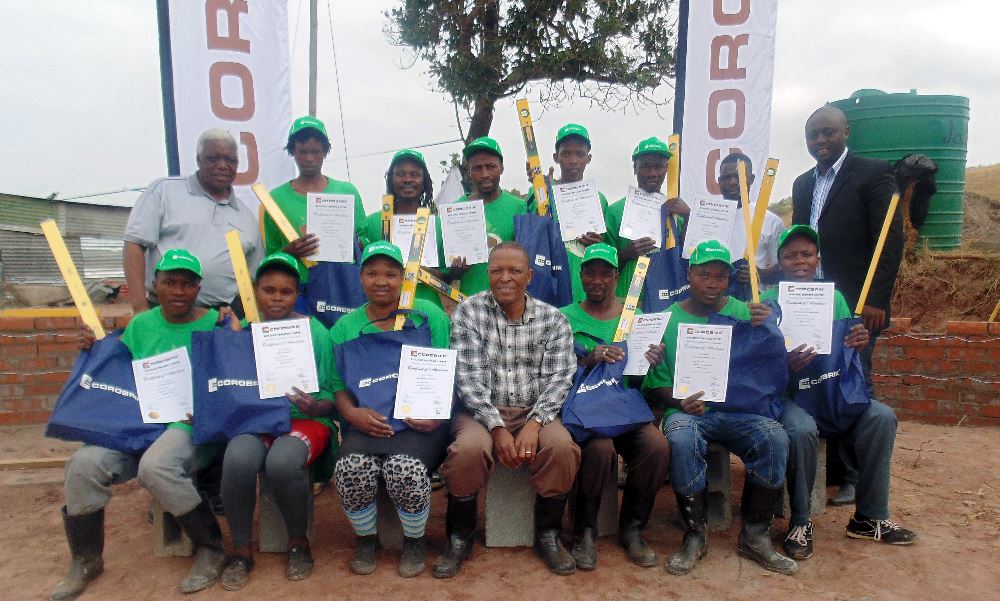
Corobrik also provided training in basic bricklaying for 12 candidates selected by the local community, providing them with an invaluable skill which will allow them to build in the area they reside.
The week long course, which was headed by Corobrik Building Training Co-coordinator, Derek Dimba, was done on site, with each trainee being educated in basic bricklaying and then moving on to build a complete rondavel. Every trainee also received a certificate and complimentary set of bricklaying tools consisting of a trowel, spirit level, builder’s line and tape measure.
Mkhize said this training was providing lifelong skills that could only benefit the greater community.
Mkhize said he opted to use Corobrik’s range of Burnt Apricot face brick for the single layer of ‘skin’ to cover the mud brick construction. The face brick layer is easily constructed and attached to the mud bricks using a wire mesh bond.
Corobrik’s Allin Dangers said Mkhize had made the right selection in Corobrik’s face brick range. “We are really proud to be a part of this exciting initiative. The outer layer of clay face brick is an innovative yet complementary in the context of traditional building concepts.”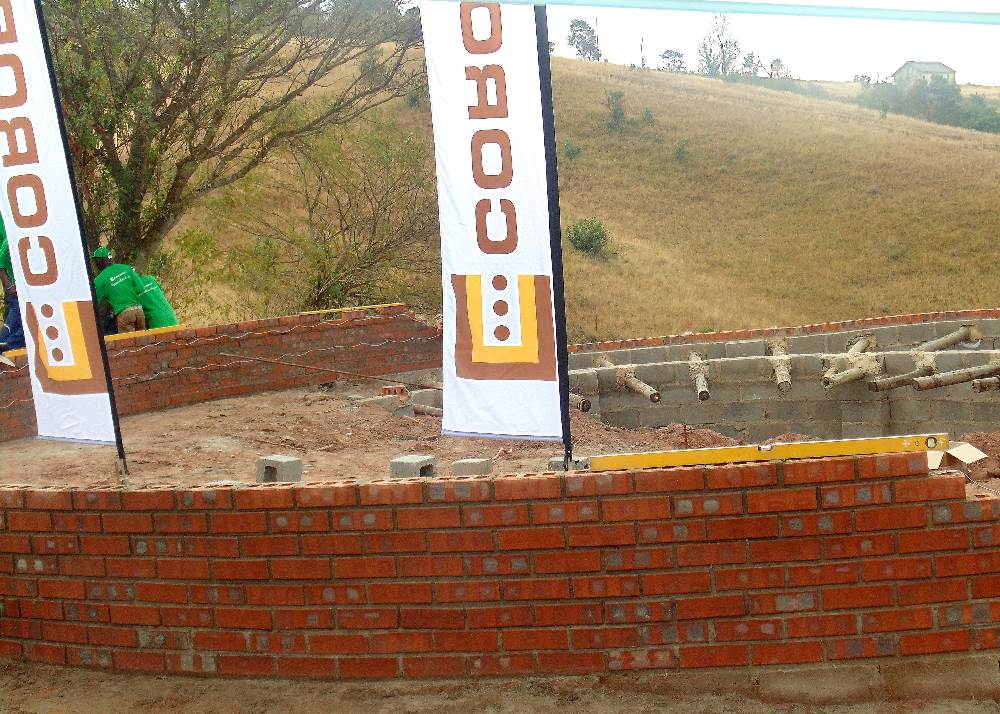
The skin of face brick is set to further enhance thermal comfort, safety and security, also contributing to that important sense of status that comes with owning a clay face brick home.
Dangers said the Burnt Apricot face brick fitted the project in terms of affordability, colour and texture and the required durability to ensure a long lifecycle.
“It so happens that this clay brickwork offers all the fire resistance qualities that are particularly important in rural landscape settings and rondavel dwellings where open fires are often used for warmth and cooking,” said Dangers.
Mkhize said one of problems with the traditional mud bricks was that they lacked sustainability. After the rainy season, the lower layer of the wall gets muddy and each year, usually in December before Christmas when family is arriving, the community paints the rondavel again. This becomes very expensive.
The face brick skin protects the rondavel from constant weathering and also negated the need for cement plastering and paint which was not only costly, but lacked longevity.
Clay bricks were selected because they are affordable and the high thermal mass helps keep the inside of these homes cool in summer and warm in winter. This has particular value in the rural areas, similar to Maphumulo, which have extreme fluctuations in temperature through the seasons.
This construction type contributes to the lowering of energy demands on the national grid and boosts power generation, helping the government to meet its electricity needs for future housing programmes.
The addition of a wood and coal stove in the centre of the rondavel added to the thermal efficiency, allowing for the cooking of food, heating of the home in winter and promoting a central focal point for the family. The stove has a chimney taking the fumes out the rondavel which eliminates the chance of suffocation. It also lowers the risk of fire.
The show rondavels will be on display for educational and research initiatives or for government or private enterprises to visit for potential investment opportunities. There is also the possibility of the project becoming a tourist attraction in line with the Western Cape’s Babylonstoren which showcases the original Huguenot dwellings.
However, Mkhize said at the heart of the project is his true passion as an architect, which is to provide people with something of which they can be proud.
“As architects we look to create a product that will influence society at large, that can be used by millions of people and that improve the quality of life.”