 South Africa has the largest known deposits of manganese ore in the world and is the largest producer of iron ore on the continent making mining operations in the arid Northern Cape critical to the national economy and the largest employers in the region.
Production volumes amongst the two biggest players in the region’s mining sector – Assmang and Anglo American – continue to increase at a tremendous speed. To both cater for new employees and respond within the ambit of the revised mining charter published by government in late 2010, both mining giants are in the throes of creating new and upgrading existing accommodation with a number of housing projects both on the drawing board and under construction.
Anglo American’s Kumba Iron Ore operation, located in Sishen near the town of Kathu, is said to be one of the seven largest open pit mines in the world. Gary Westwood, Sales Manager for the Free State and Northern Cape region says “Kumba is currently building 60 mine management houses with our Blue Barley Travertine and Roan Travertine face bricks. A contract for the construction of a further 479 50m2 houses has been awarded to Steffanuti Stocks and is scheduled to begin before year end.”
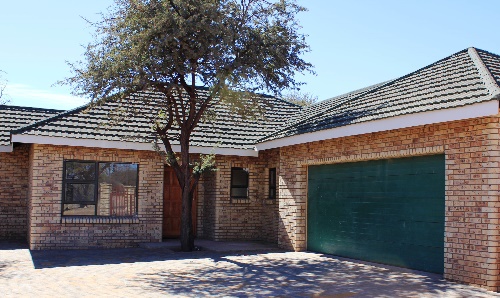
In addition, production at the new Kolomela mine in Posmasburg came on stream in May 2012 and is expected to add additional production of 13Mtpa. “This Kolomela mine expansion saw Corobrik delivering some two million Corngold Satins for the building of 400 staff houses. The project has been divided into three projects, namely Postdene, Airfield and Boichoko,” he added.
“Review of the Mining Charter in 2009, prior to the amendment in 2010, indicated that many mines were making solid efforts to upgrade housing with many moving away from controversial hostel systems to create quality family homes. To build on this, new policy guidelines have since been put in place to ensure that accommodation was not only consistent with international best practices but also to help facilitate home ownership for all mine employees by 2014. It is a stipulation that home ownership must be both affordable and sustainable,” he said.
He said that, in meeting the objectives of the mining charter, the use of clay brick in housing projects went a long way to provide both affordable and sustainable housing. A clay brick house meets the aspirational requirements of the prospective homeowners and all the dignity associated with living in ‘proper’ houses.
Miners keen to be housed may consider themselves fortunate that South Africa has not compromised and digressed from its well-entrenched masonry tradition and all the associated benefits that clay brick brings to house construction.
“Clay brick fits all three dimensions of sustainability. Construction is proven to be economical and its record of performance, robustness, and durability assures a low lifecycle cost. Add to that, that clay bricks have mineral properties that meet all necessary requirements for healthy living; they release no toxic fumes, under both normal and fire conditions to impinge on air quality and they have natural sound insulation properties to support quiet indoor environments.”
He added that, in light of the fact that the region bordered the Kalahari desert and had some of the most acute temperature fluctuations in the country, the energy efficiency that resulted from the use of clay brick was particularly important. The real benefits of clay brick construction are to be realised in our long hot summer months when the natural thermal properties of clay brick help attenuate the impact of high outdoor temperatures indoors.
“The thermal mass the clay brick walls provide slows the heat flow to the inside by 6 to 8 hours over the hottest parts of the day, moderating internal conditions and providing target thermal comfort for longer, thereby reducing artificial cooling requirements. The use of clay brick in this instance complements the priority being given to the use of solar power in these projects” he added.
Gary Westwood said that one of the most critical aspects of the housing projects in the Northern Cape – and one of the greatest challenges faced by the mining industry as a whole – was the resettlement of residents to facilitate the expansion of a mine. “Plans are currently being finalised to relocate the entire town of Dingleton situated 12 kilometres south west of Kathu to allow further expansion at the Sishen mine. This will require the building of more than 500 houses as well as schools, police stations and commercial properties.”
“In Kathu, there are plans to build 700 houses. Group 5 is already busy with the construction of 300 houses using our Sapphire Satin, Nevada Travertine, Montana Travertine, Nebraska Travertine and Opal Satin. VHB Developments is also busy with 60 houses, which are being built with Sapphire Satin and Corngold Satin. Approximately 200 have already been completed and there are plans to extend the total number of houses to approximately 1000.”
He understands that Assmang staff homes would be built by the mine with the intention to sell them onto the workers at subsidised rates. To help facilitate this staff receive a housing allowance of R2500 that can go towards bond repayments whilst they are in Assmang’s employ.