 Established in 1920, the University of Pretoria’s Faculty of Veterinary Science, in Onderstepoort, is the second oldest in Africa and still the only faculty of its kind in South Africa.
The first faculty buildings were inaugurated in 1921 and the first student residence opened its doors in 1924. During that time eight students qualified as the first South African-trained veterinarians.
The University of Pretoria’s projections show that student numbers are expected to increase in the future due to the higher intake of new undergraduate students, thus creating the need for more on-campus residence space.
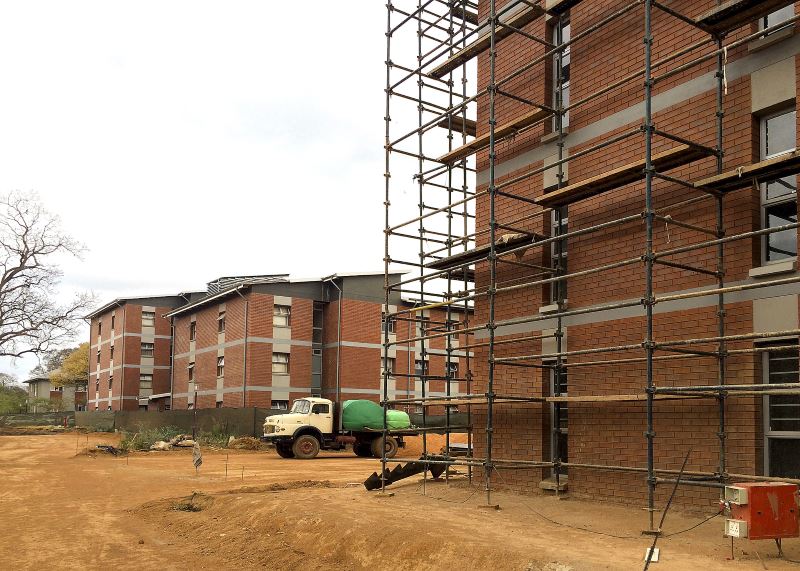
MEG Architects completed the first phase of the Onderstepoort Student Housing development in 2011 and, when approached to deliver the second phase, architect Tienie van Rooyen said that he believed it should be identical.
The initial phase of the development used Corobrik Country Classic Satin face, the red brick with a hint of blue. Apart from the mandate for low maintenance, the same face brick was specified as the majority facade finish to strengthen the ties with the first phase. Vertical plaster bands running through the windows are painted with a neutral earthen colour, further amplifying the use of the face brick.
The SANS 10400 Building Regulations requires that building envelopes perform with a minimum thermal resistance of that of an un-plastered, 230mm thick clay brick wall. Van Rooyen explains that with this in mind, the northern cavity walls of the residences are built with a 230mm wide cavity and filled with fly ash for further insulation, the large cavity creating a passive sunshade during the summer, providing further lag and extending the time in the thermal comfort zone.
The other exterior walls are built with a conventional 50mm wide cavity and high-density polystyrene was added in the cavity for further insulation. The combination of thermal capacity (from the bricks) and thermal resistance (from the bricks, the air in the cavity and insulation material applied), provide a wall that contributes to a comfortable temperature within the respective blocks, both during the hot summer and the cold winter months.
The second phase was completed in November 2014.