Walt Disney Concert Hall (WDCH) is the home of the Los Angeles Philharmonic, presenting the best in classical music, contemporary music, world music and jazz.
Designed by architect Frank Gehry, Walt Disney Concert Hall (WDCH) is an internationally recognised architectural landmark and one of the most acoustically sophisticated concert halls in the world.
From the stainless steel curves of its striking exterior to the state-of-the-art acoustics of the hardwood-panelled main auditorium, the 3.6-acre complex embodies the unique energy and creative spirit of the city of Los Angeles and its orchestra.
Thanks to the vision and generosity of Lillian Disney, the Disney family, and many other individual and corporate donors, Los Angeles enjoys the music of the Los Angeles Philharmonic, the Los Angeles Master Chorale and visiting artists and orchestras from around the world.
A living room for the city
Architect Frank Gehry envisioned a place in which people would come together and feel comfortable doing so – an iconic destination with which people would identify and think of as their own. He wanted to create “a living room for the city” where music would be accessible to great numbers of people.
“I’m trying to make a building that invites you in – the body language is welcoming.”
Process
It took 16 years from Lillian B. Disney’s initial gift in 1987 to the time Walt Disney Concert Hall was ready for the public. When it finally opened in October 2003, it was recognised as an architectural masterpiece and acoustical marvel, forever changing the musical landscape of Los Angeles.
Finding an architect for Walt Disney Concert Hall began in 1987 with a committee headed by attorney and real estate developer Fred Nicholas. An initial list of 80 architects from around the world was whittled down to 25, then six, and then to the final four.
Among the four was architect Frank Gehry, who may very well be the one architect alive whose imagination has so much in common with Walt Disney’s. His work offers a sense of wonder and delight with serious undertones, similar to Disney’s movies. Gehry has an intuitive ability to understand what people want, with an immediacy that connects to all types of people.
 Architect Frank Gehry won the commission decisively, with a thoroughly considered design and the potential for a highly original architectural statement. With its openness and space for lush gardens, Gehry’s scheme evidenced a full understanding of what a building in Los Angeles should be.
Drawings
Gehry’s competition-winning project proposal for Walt Disney Concert Hall marked just the beginning of the design process. Now, with the architect named, the client group could begin to address the complex set of issues involved in the Concert Hall’s planning and implementation. Among the key concerns were the acoustics of the Hall, use of the overall site, urban planning beyond the immediate site, and the contractual agreements among the entities involved.
Models
The design of the hall and acoustics evolved together, as Gehry designed the Hall from the inside out. Dr. Minoru Nagata was selected as the acoustician because of the bright and clear, yet warm, sound of Tokyo’s acclaimed Suntory Hall. He and his assistant, Yasuhisa Toyota (who became chief Concert Hall acoustician upon Nagata’s retirement in 1994), worked with Gehry by fax machine and traveled to Los Angeles monthly.
Construction
The building of Walt Disney Concert Hall became ever more complicated, and the decision-making turned cumbersome and lengthy. A complex mesh of political, planning, management, and bidding problems led to a shutdown of the project in 1994. But in 1996, through press articles, key events, professional support, and a fund-raising campaign, Walt Disney Concert Hall began to show signs of life. When it finally opened in October 2003, this architectural masterpiece and acoustical marvel forever changed the musical landscape of Los Angeles.

In the end, what matters most, of course, extends beyond the people and the particulars of its creation to the future life of the building itself. Walt Disney Concert Hall has engaged audiences with the greatest ideas in music and architecture. The space of the Concert Hall has challenged conductors and musicians to rise to a new level of performance. It has transformed the Los Angeles Philharmonic, inspiring it to be more daring, and the city of Los Angeles, becoming what President and CEO of the LA Phil, Deborah Borda, terms a “convener” of intellectual thought and discussion.
Architecture
From its striking outside to its intimate inside, Walt Disney Concert Hall is an architectural marvel that never loses sight of its main function – bringing music to the city of Los Angeles and beyond. Get to know the building that architect Frank Gehry designed “from the inside out.”

Exterior
The first view of Walt Disney Concert Hall most people see is the curving stainless steel skin of the building’s exterior. Resembling silver sails, the curves echo the billows in the auditorium and play off the bowed cornice of the Dorothy Chandler Pavilion, forging a link between new and old.

In architect Frank Gehry’s original design, Walt Disney Concert Hall was intended to be clad in stone. After receiving much acclaim for his titanium building in Bilbao, however, he was urged to change the stone to metal. With this new material Gehry was able to tweak the shape of the exterior, creating the iconic silver sails we see today.
Interior
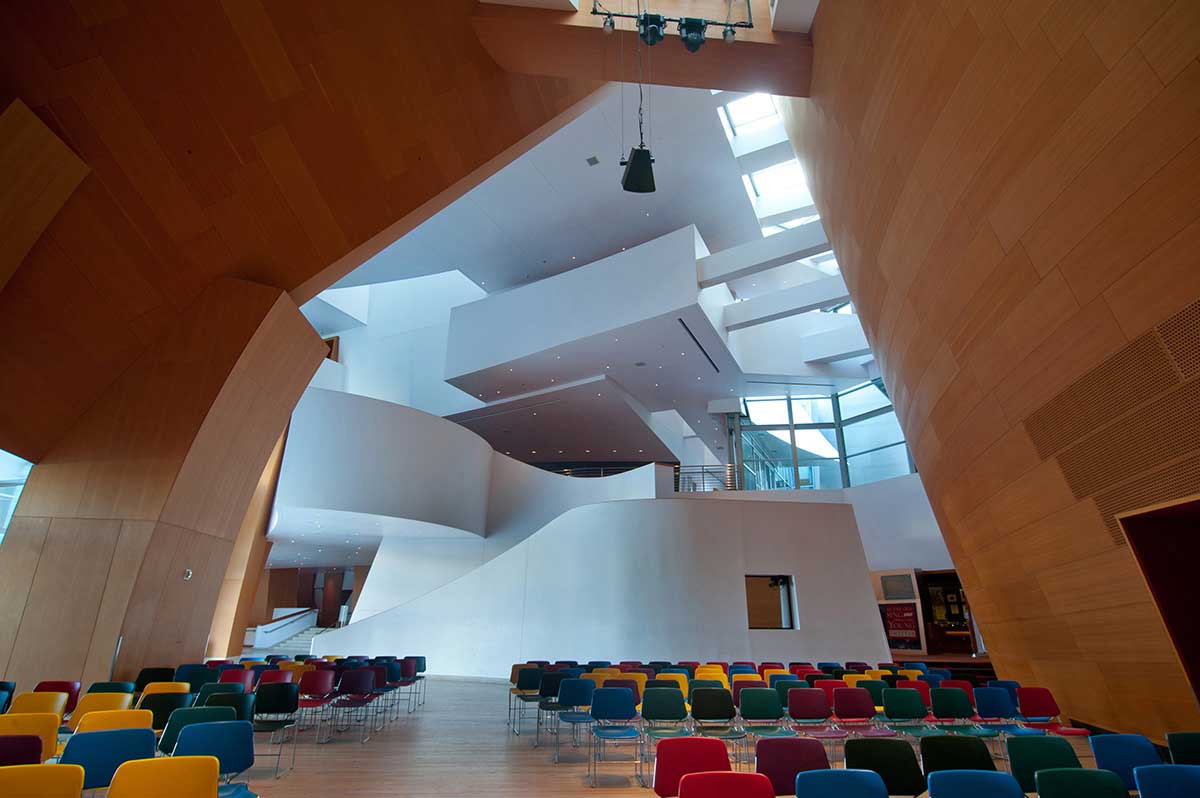
Gehry’s team visualised the lobby as a transparent, light-filled “living room for the city,” opening onto the sidewalk. In contrast to the tightly enclosed foyer of the Dorothy Chandler Pavilion, the lobby would have a separate identity and serve as a symbolic bridge between everyday life and the inner sanctum. Walt Disney Concert Hall was intended to be a center of civic activity, not just a destination for concertgoers.



Seating
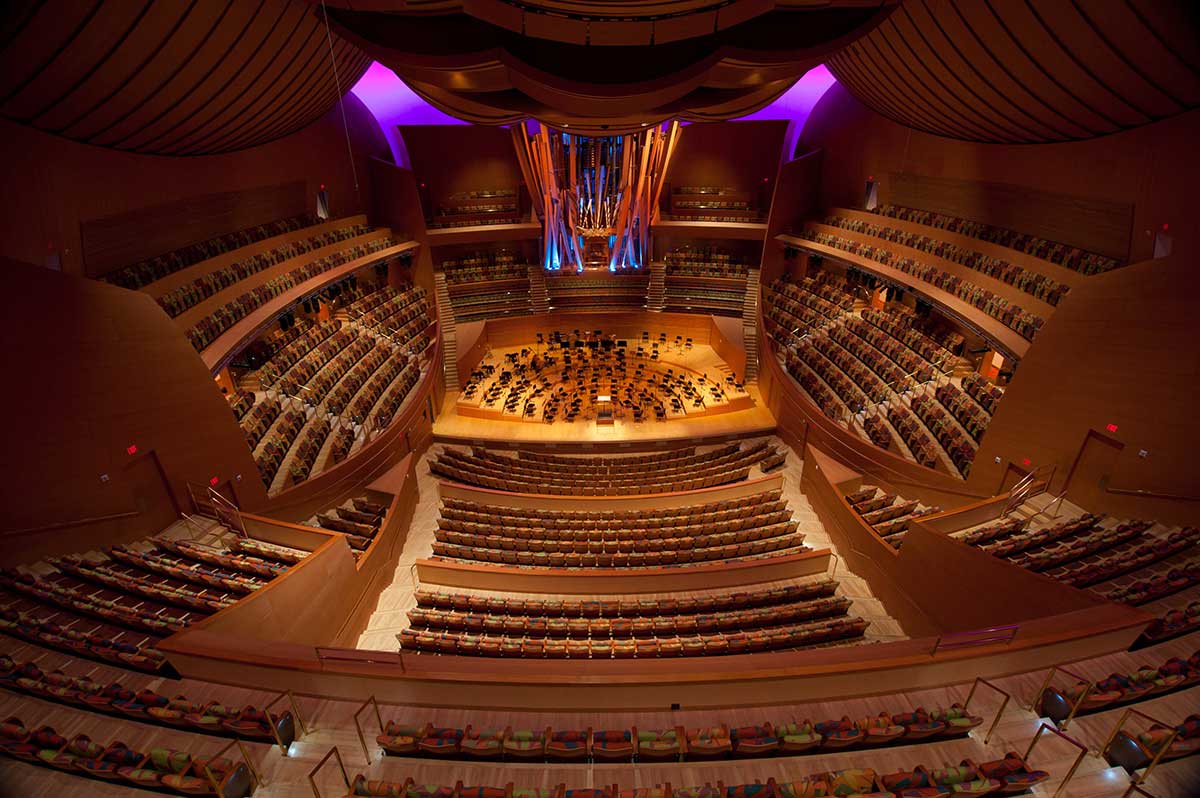
Inside the warm, Douglas fir-lined interior are 2,265 seats that are steeply raked and surround the stage. Ernest Fleischmann, former Executive Director of the LA Phil, felt that balconies and boxes reinforced a social hierarchy and proscenium arches separated players from listeners, and he urged that they be eliminated. In Walt Disney Concert Hall, the orchestra plays in the space in which the audience sits. The vineyard style seating brings the audience close to the orchestra, and offers an intimate view of the musicians and conductor from any seat.

Stage
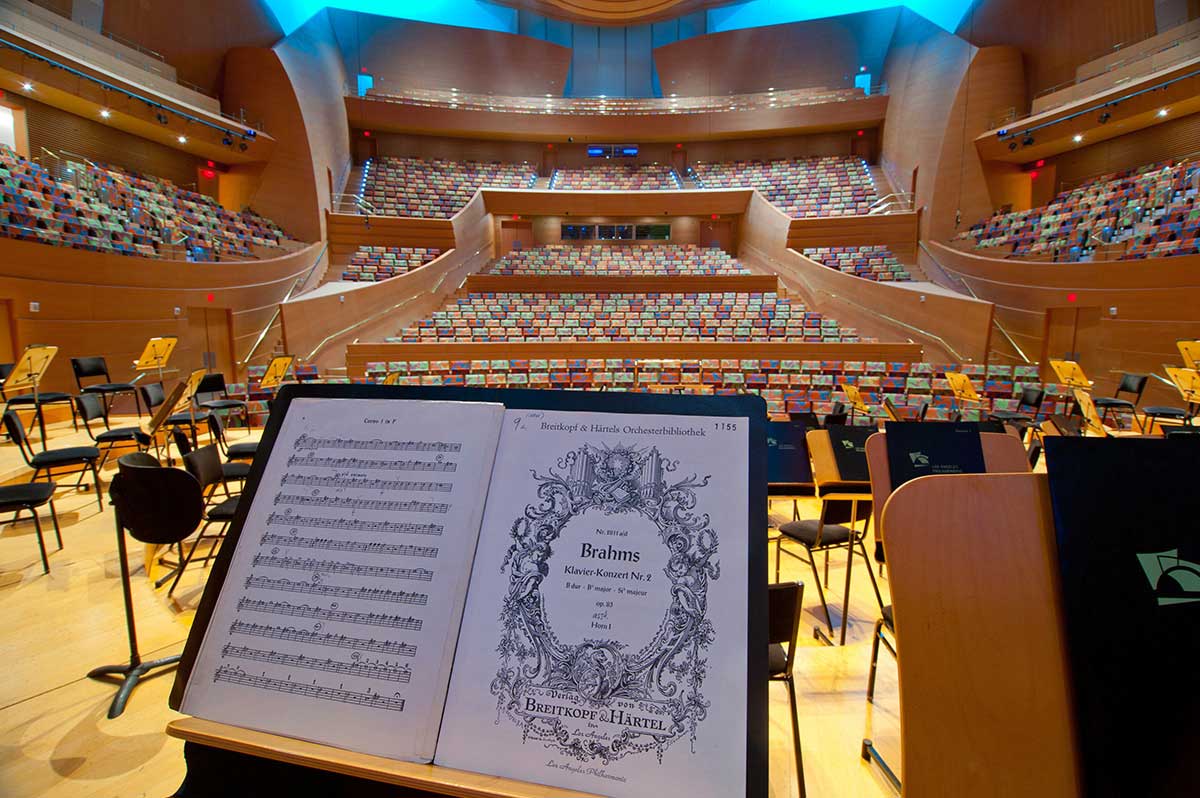
The stage, made from Alaskan yellow cedar, provides resonance and can be configured to hold larger performing forces by removing the first rows in Orchestra View.
Garden
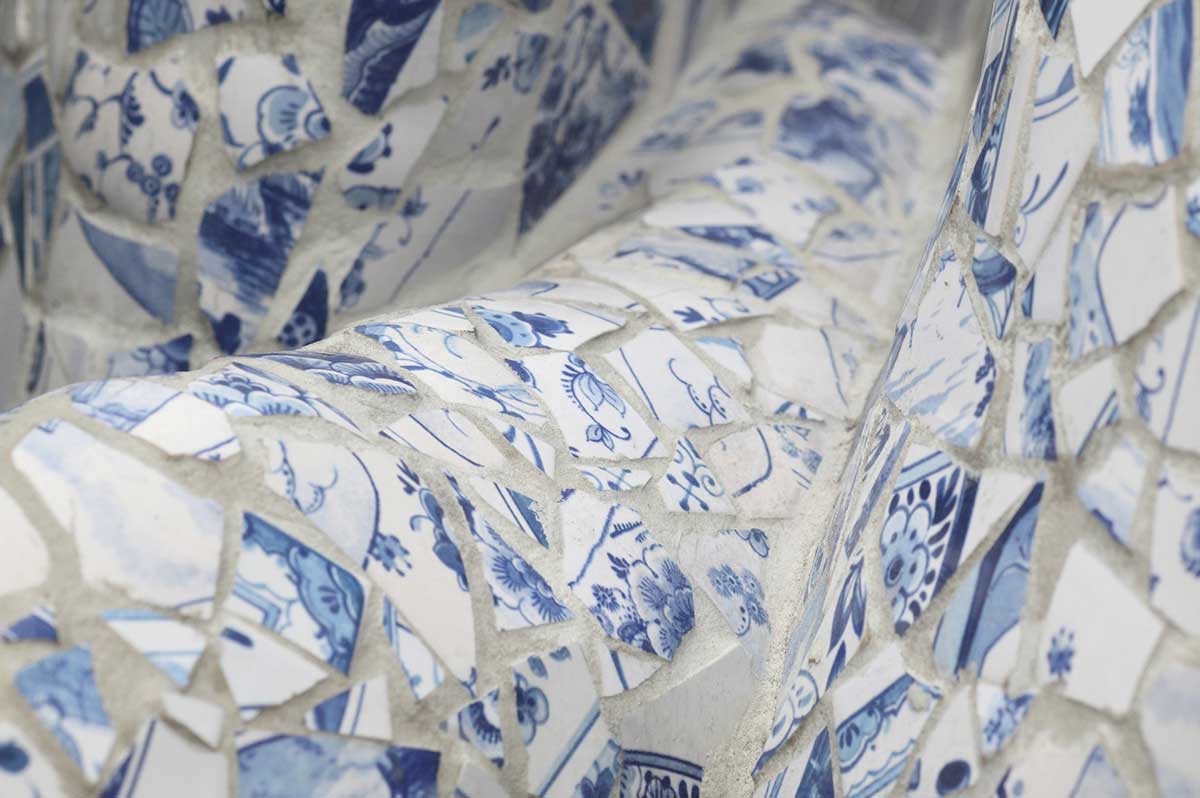
Past the barge with billowing sails is a public park that doubles as an oasis for concertgoers. At the center of the garden is a rose fountain dedicated to Lillian Disney, who provided the initial donation for the Concert Hall. The fountain is constructed from broken pieces of Delft China, Lillian’s favourite. Gehry named the fountain, “A Rose for Lilly.”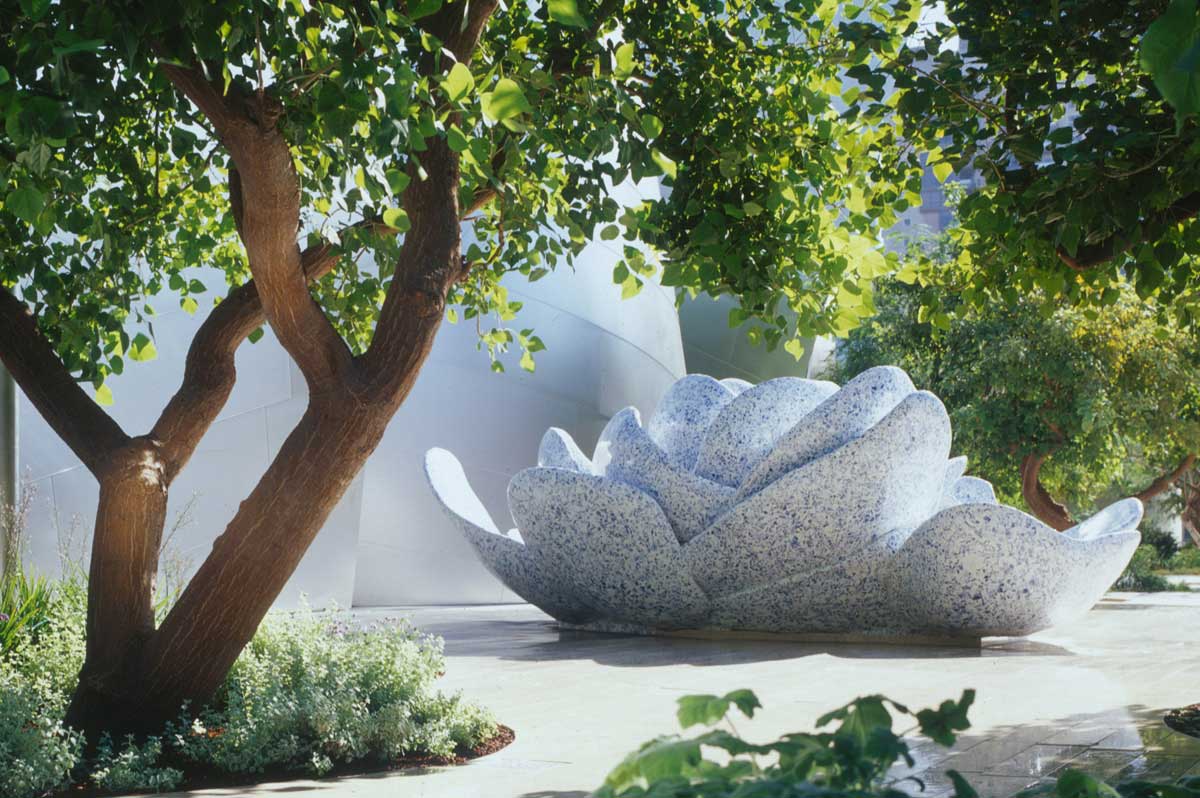


Source: LA Phil | The Walt Disney Concert Hall 10th Anniversary