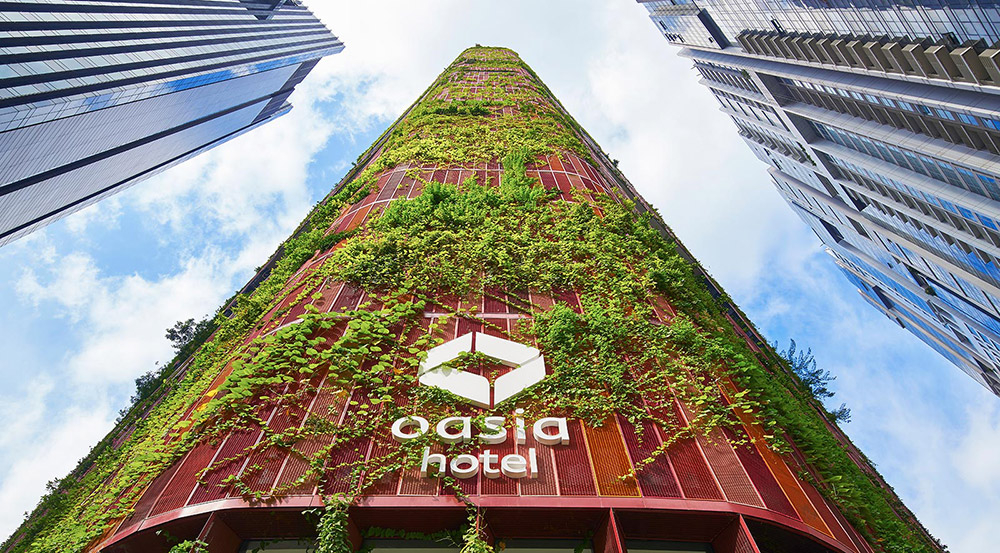
A major trend in architecture is transforming skyscrapers into vertical living gardens. These designs go a long way in improving how we will live in the future.
Two countries, in particular, Singapore and Canada are attempting to transform their skyline. In Singapore, engineering firms like WOHA are covering their buildings with lush, indigenous plants.
Architect Wong Mun Summ says, “To deal with high densities in cities, particularly Singapore where we are land-limited, it is actually important to bring landscape greenery and nature very close to where people live and interact. This is how we connect people back with nature.”
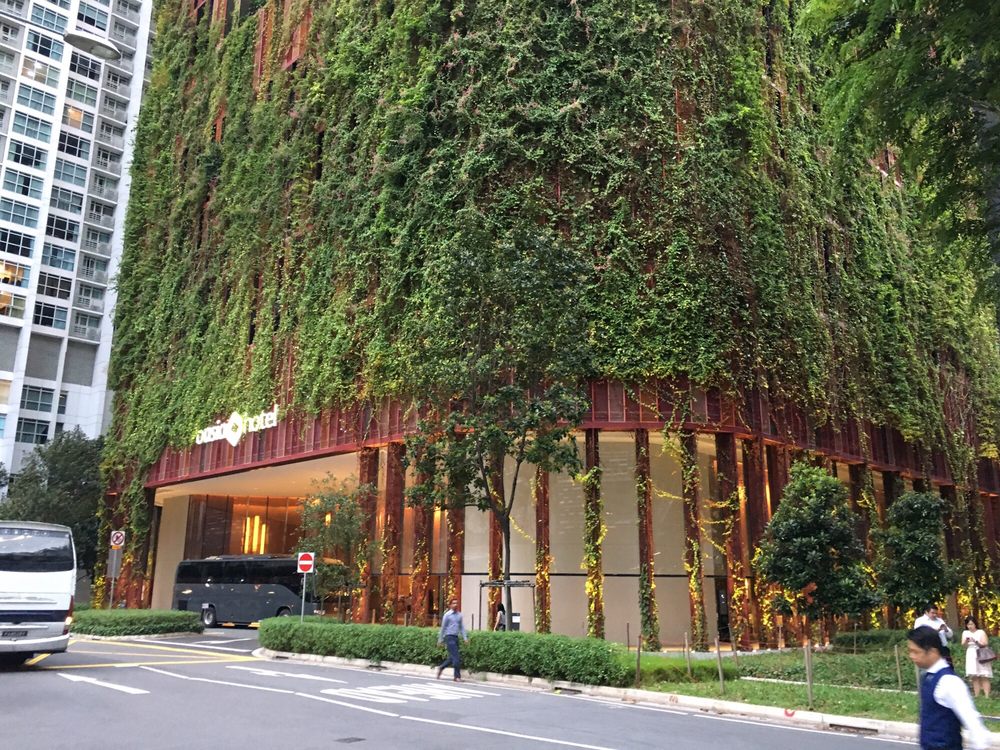 The crimson-coloured Oasia Hotel Downtown tower comprises a vine-clad stack of open-to-the-elements atria, and vegetation growing on the façades. The Oasia Hotel and others designed with an environmentally friendly impact assessment are helping to bring biodiversity back into urban areas. This is because this building has vertical gardens integrated into its design, it actually contains 1000% more plant life that could have existed on the original plot of land. Having buildings that integrate nature in this way within our dense cities could have a measurable impact on the quality of life and the quality of the environment.
Building skyscrapers with steel and concrete, two materials that account to 16% fossil fuel consumption and an estimated 8% of global CO2 emissions. One of the reasons we get a heat build-up in cities is a process known as insolation. When the sun hits a concrete skyscraper, heat is restored within the building and then re-radiated back into the environment causing the air temperature to rise.
When WOHA designed the Oasia Hotel, they used plants to combat the problem. “In our projects, we have always tried to aim for more than 100% green replacement. We need to find plants that can handle not just the wind, but maybe also need to be quite hardy.” Says Summ.
A Tropical high-rise building skyscraper, when elevated, nice cool breezes or winds flow around the building making the environment more comfortable. Buildings like these are forging a new way on how we should be thinking about how we live in the future. High-density cities should not forget about gardens, parks and nature.
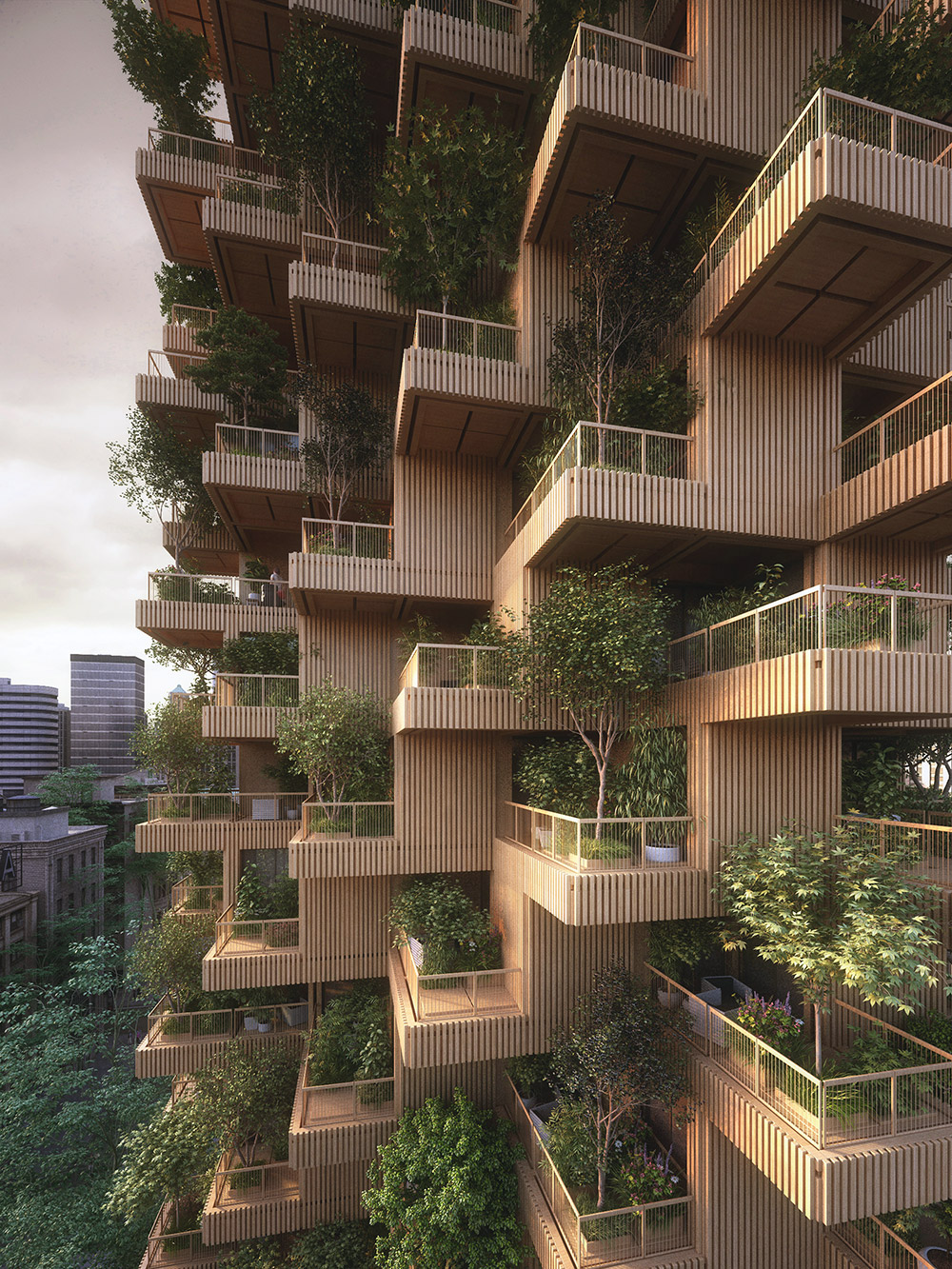
In Canada, architects and engineers are piloting new designs out of ancient building material: wood. Structural engineer at the University of Northern British Columbia Dr Thomas Tannert says, “Wood is clearly an advantageous material because it requires much fewer resources to be extracted from the plantation. It requires fewer resources to transport on site. It allows for faster construction”.
To construct a wooden skyscraper, engineers use mass timber, which is engineered to handle loads similar to concrete and steel.
“Wood has a very favourable strength to weight ratio. Compared to how heavy it is, it is almost as strong as steel.” Says Tannert.
Builders use a technique called cross-laminated timber, where different layers of wood are glued together in a cross-based orientation. Wood has had a major historical drawback…fire. But mass timber today doesn’t ignite so easily.
“All these structural wood elements, that need to be protected from fire, they’re encapsulated in drywall. These elements cannot burn anymore, and they’re just as safe as if it were a concrete structure.” States Tannert.
Wooden buildings have huge environmental benefits too. In all of Canada, the US, Europe, the amount of wood growing is significantly larger than the amount of wood that is actually harvested. If trees are harvested and put into structures, there is an incentive to reforest more areas and grow more trees.
This trend has spread to countries like the UK and Japan, kick-starting the next race for the tallest timber tower.
By 2050, there will be nearly 10 billion people living on this planet, and two-thirds of us will be in cities. To handle the rise of human population and global temperature, indigenous plant designs and wooden skyscrapers could play an important role in curbing environmental and economic impacts. It will make us feel better and healthier too.